
EWUCRT Arranges 30th Knowledge Sharing Seminar on Civil Service Career Aspirations in Bangladesh
Nov 19, 2026
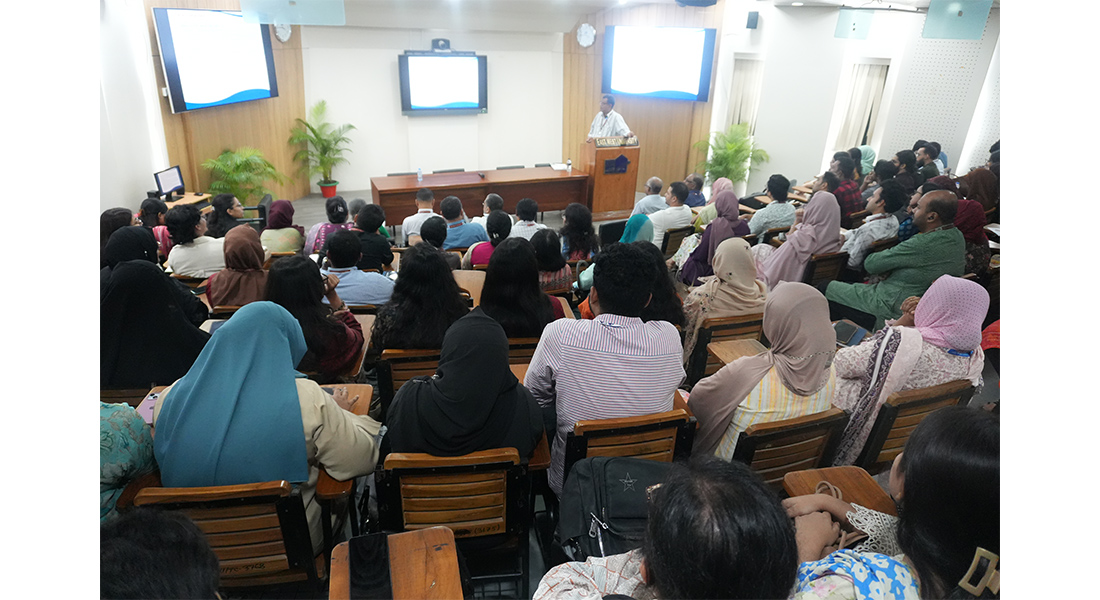
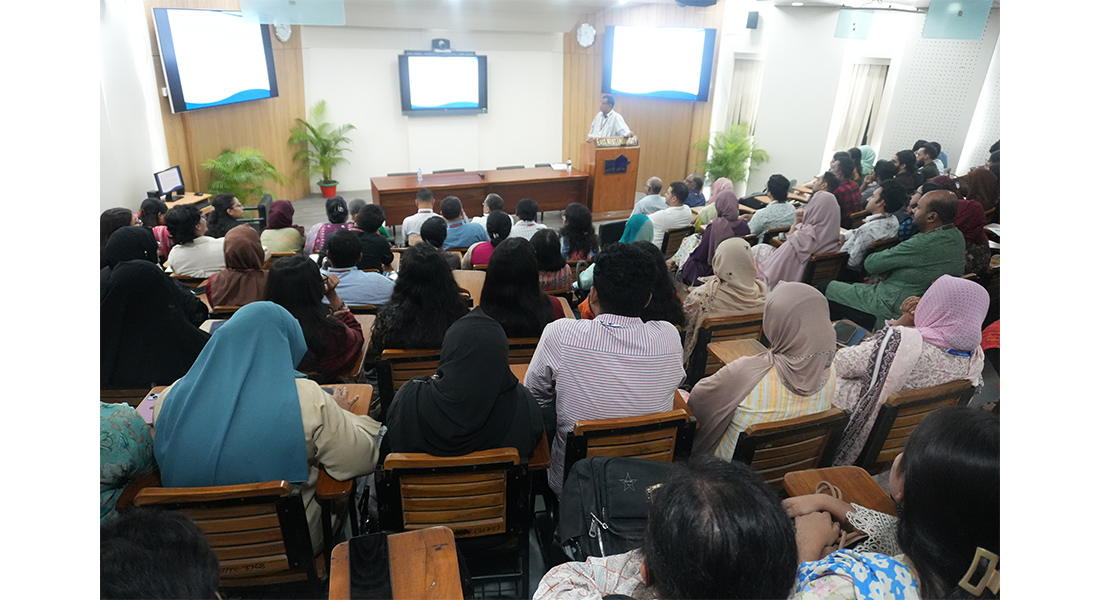
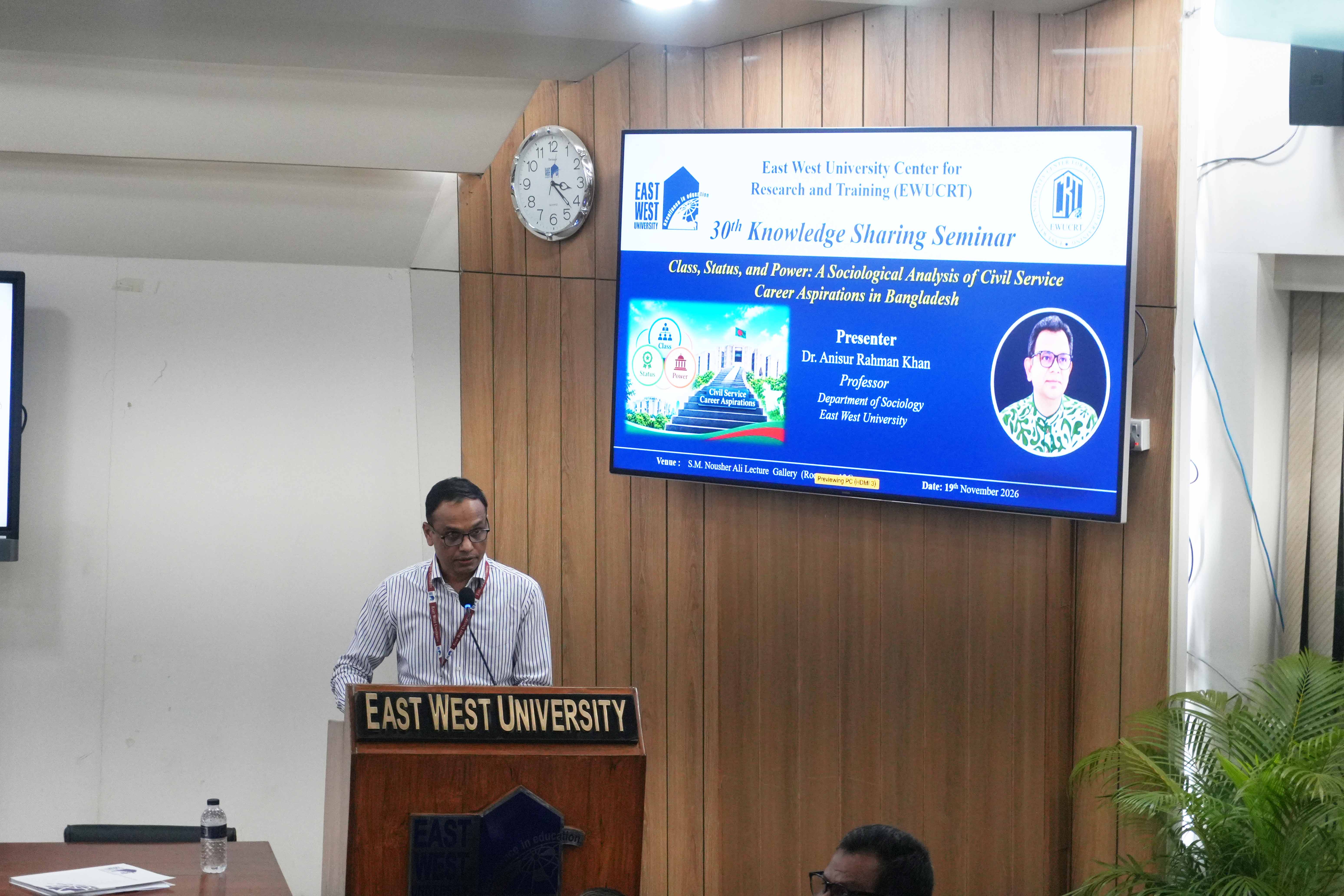
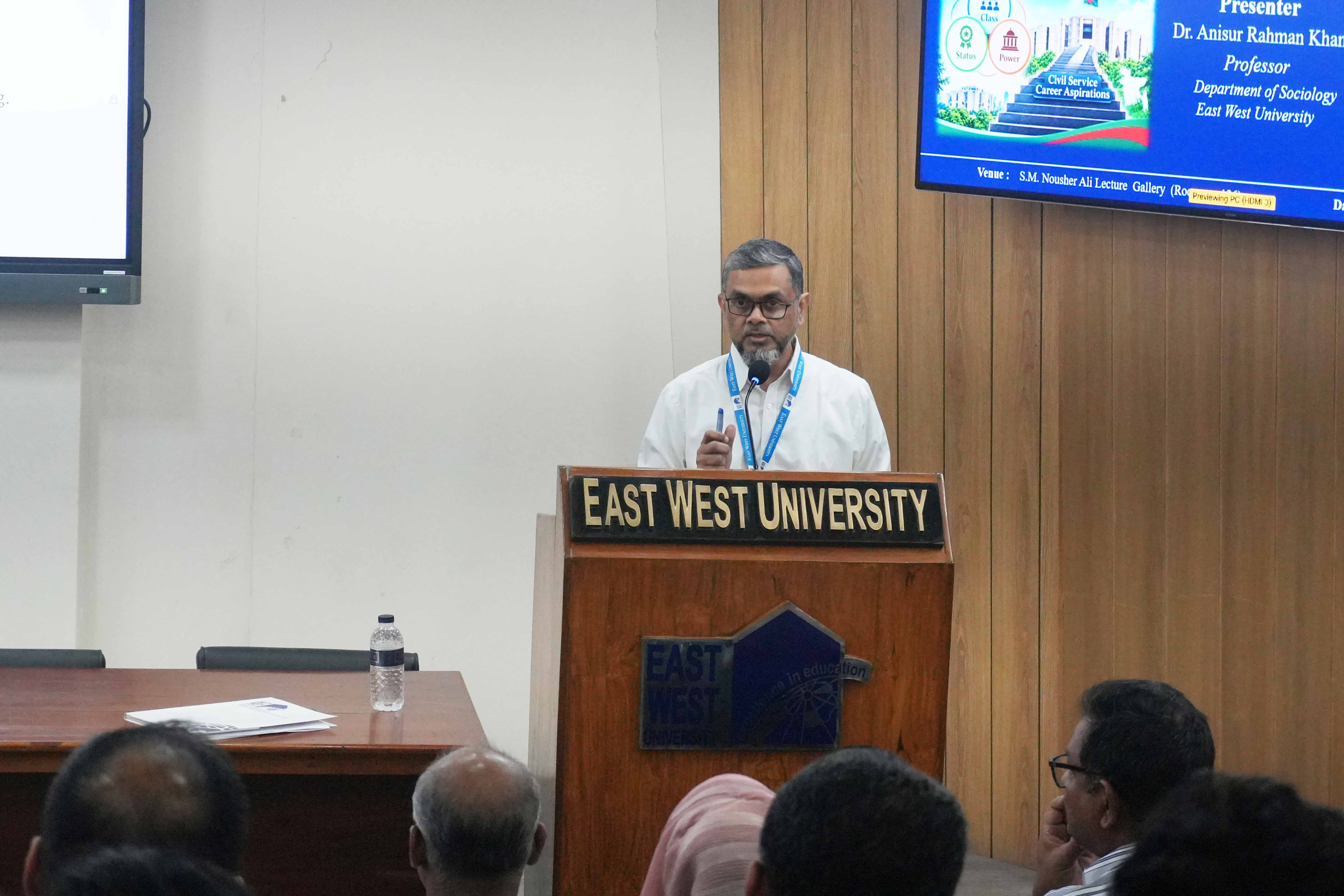
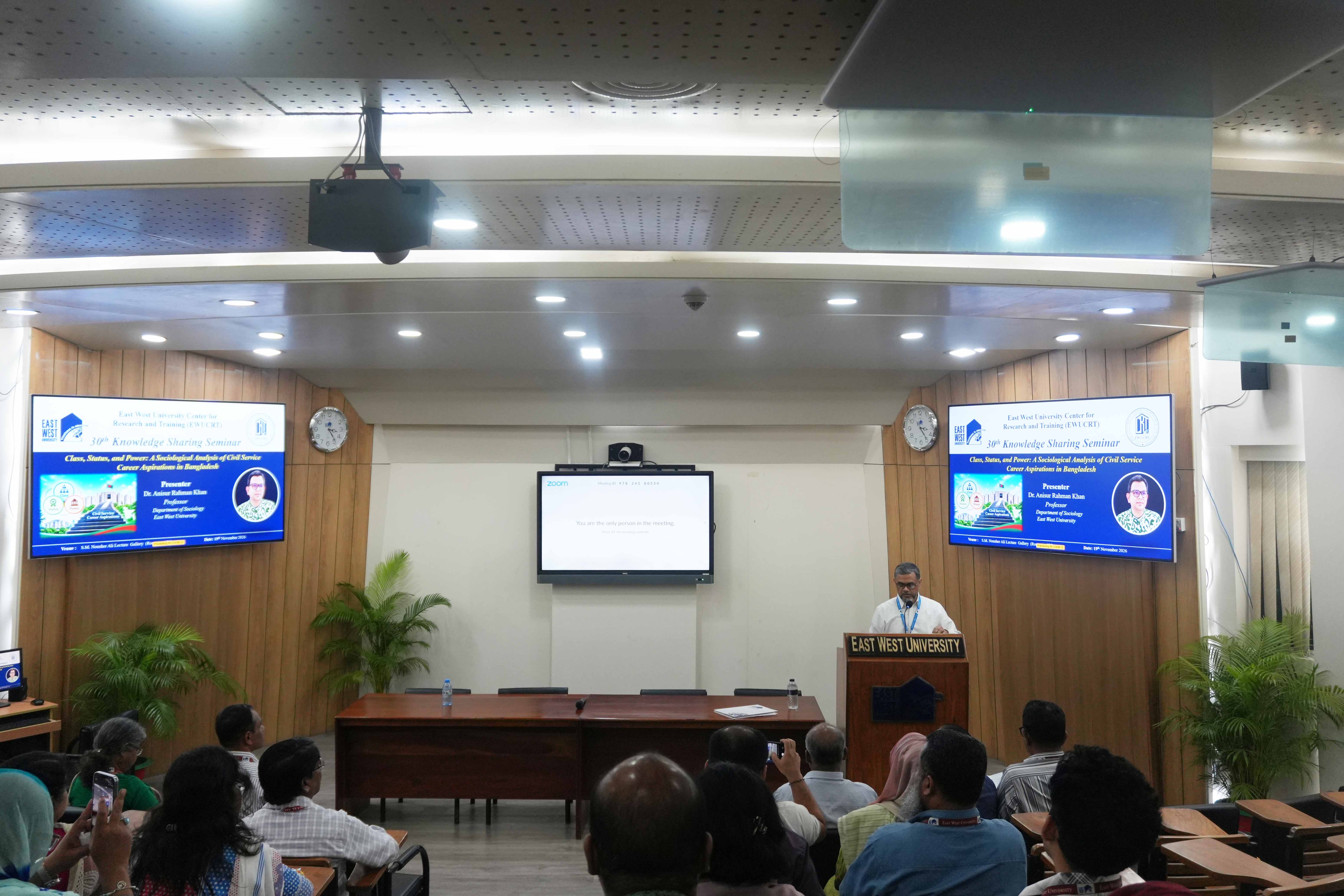
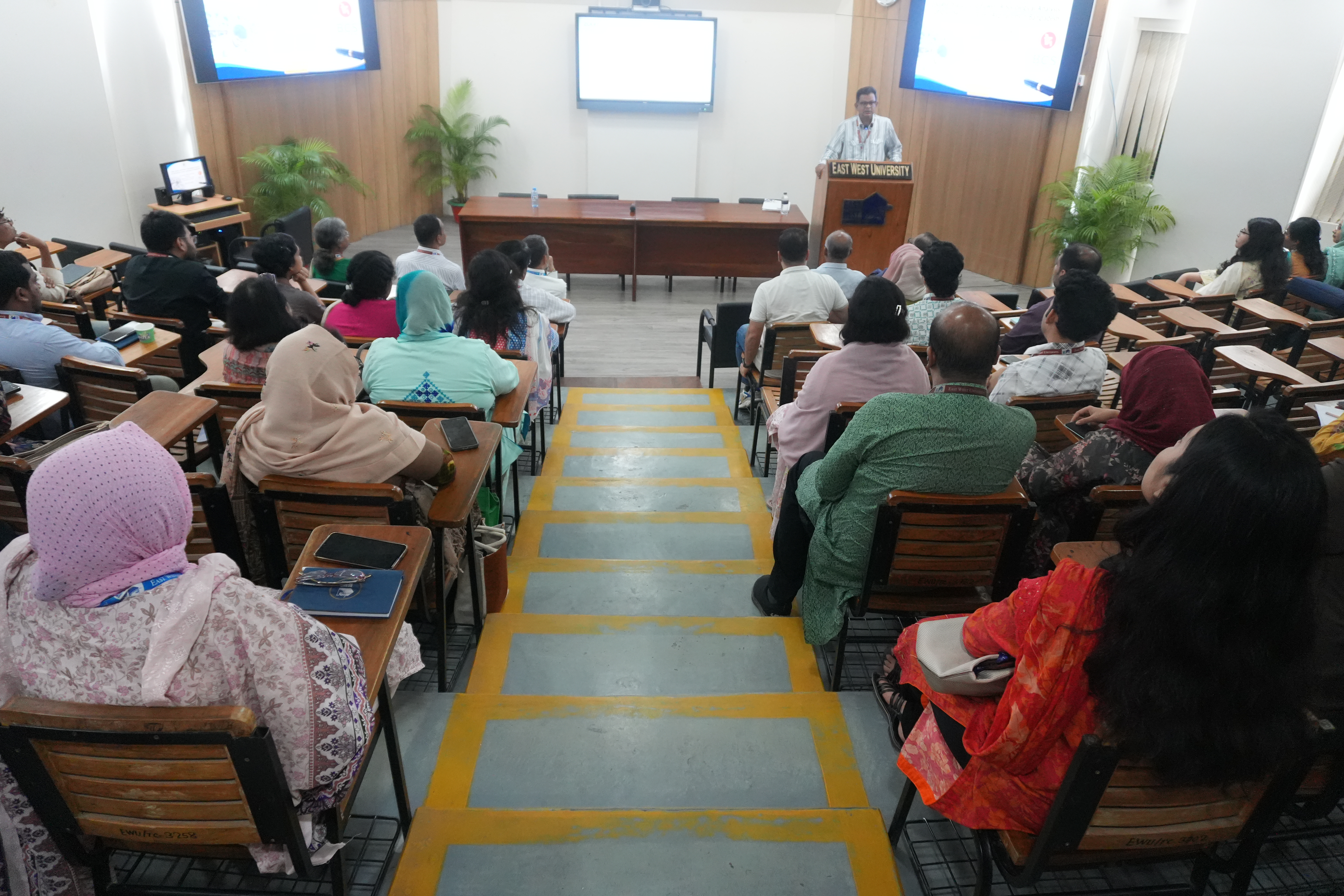
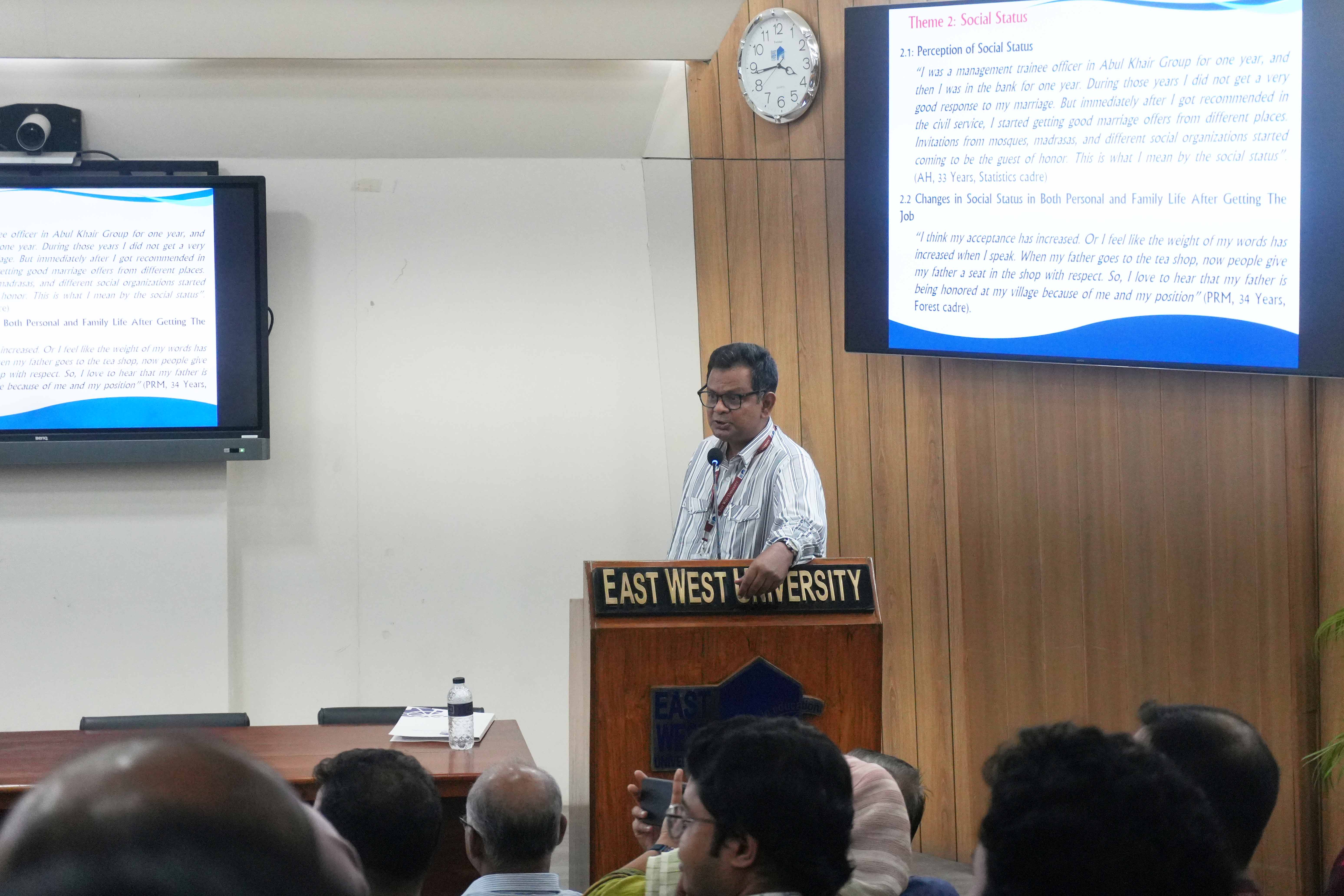
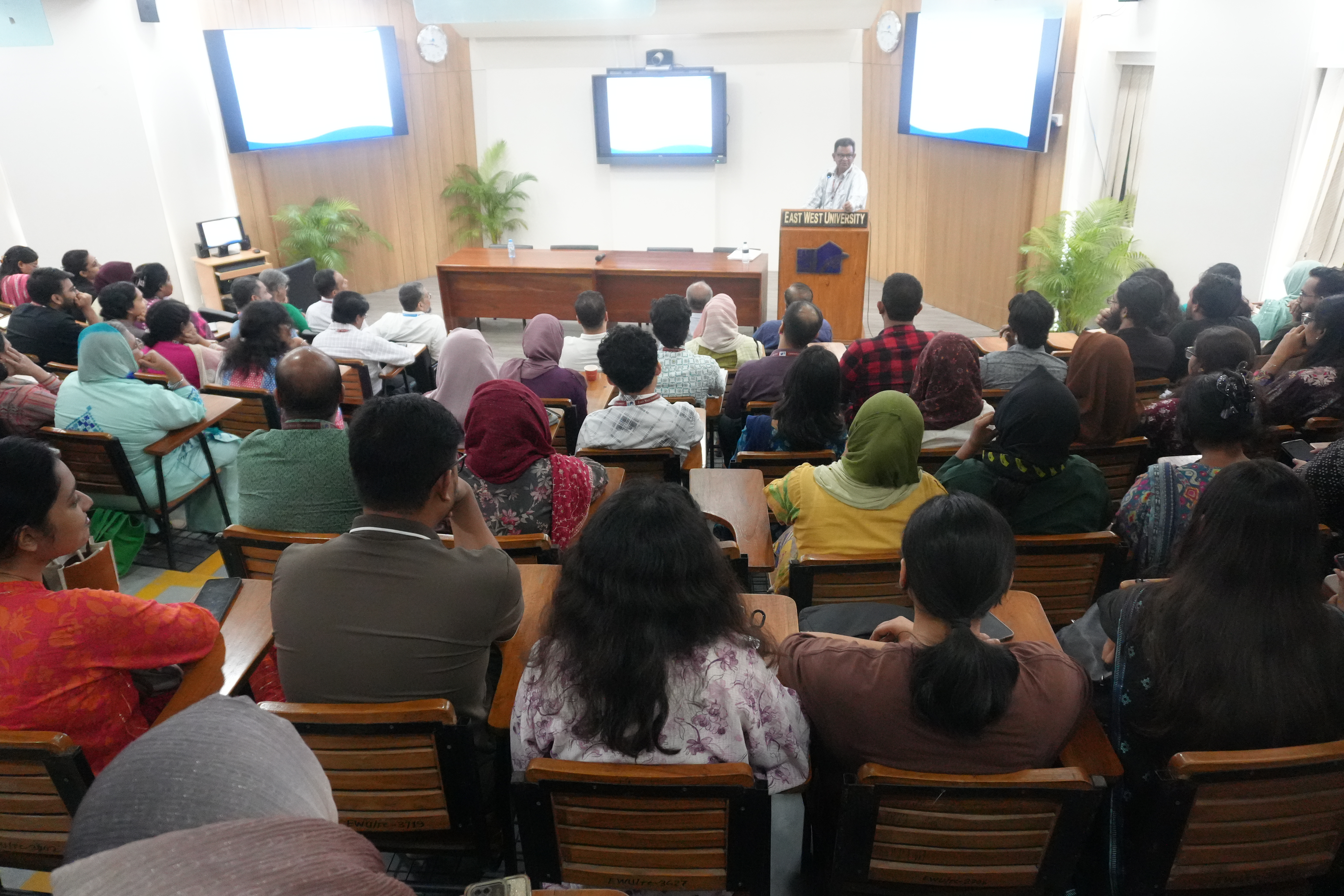
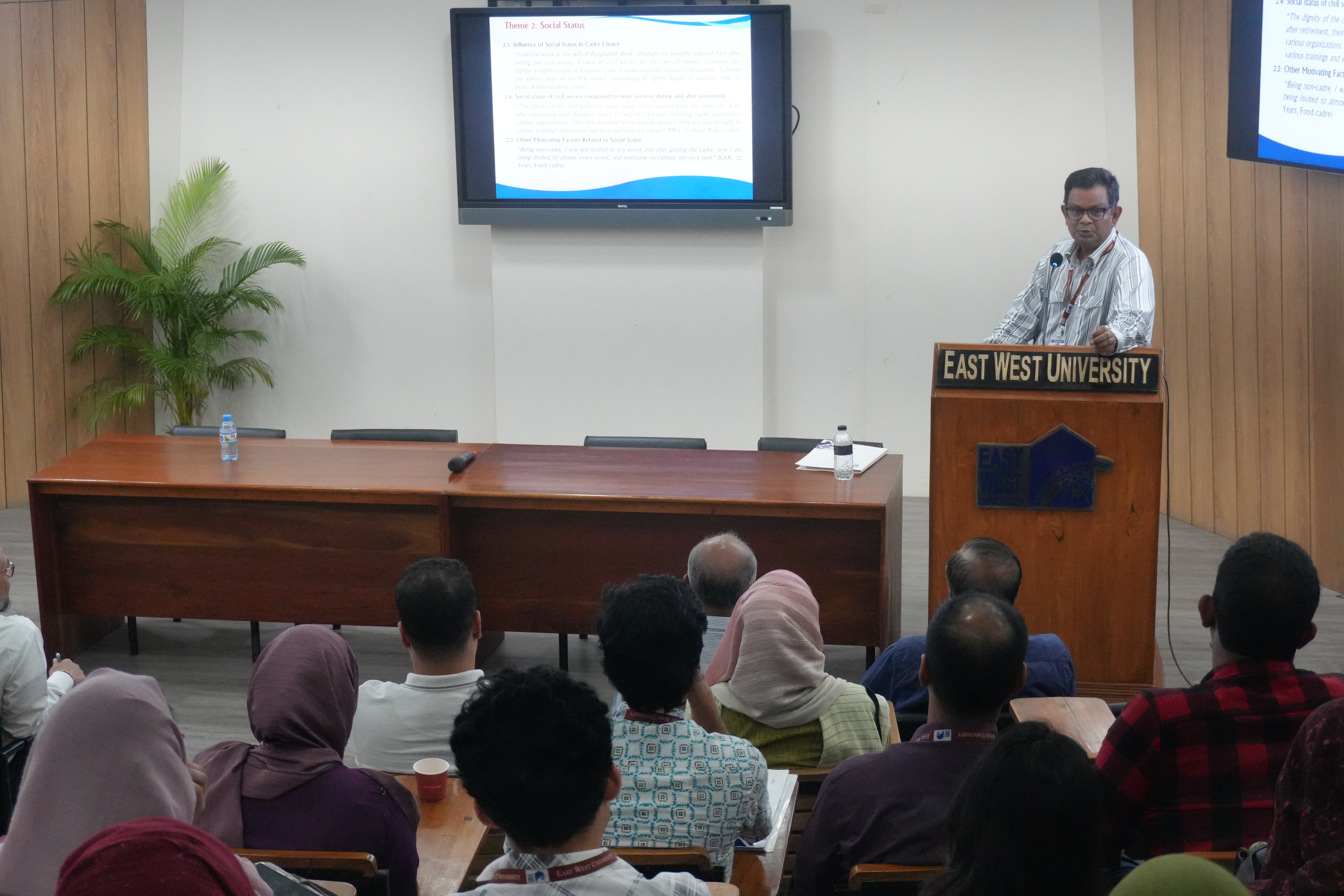
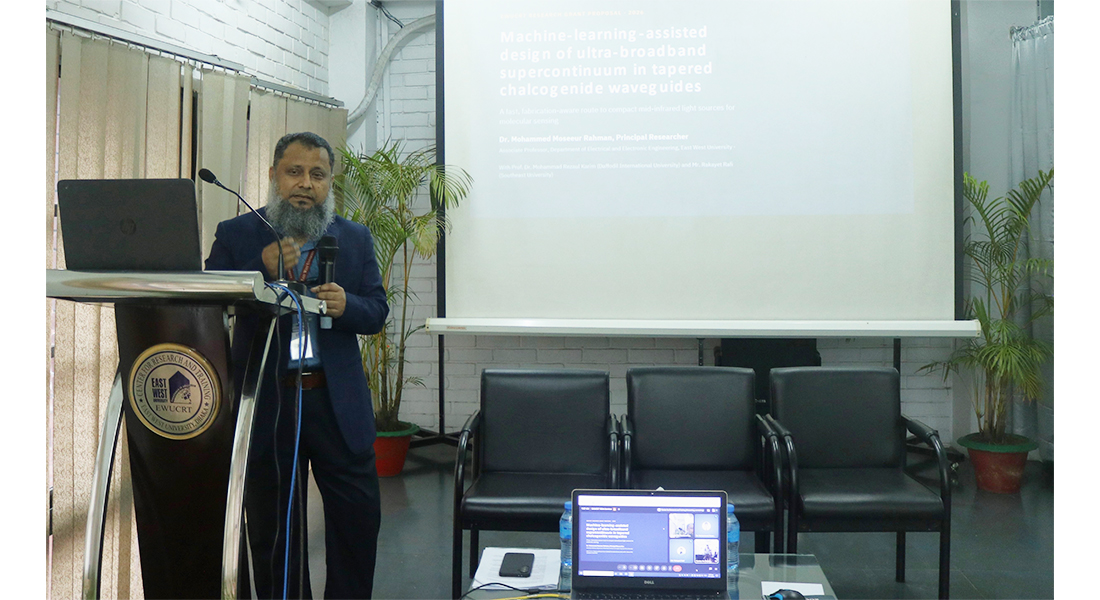
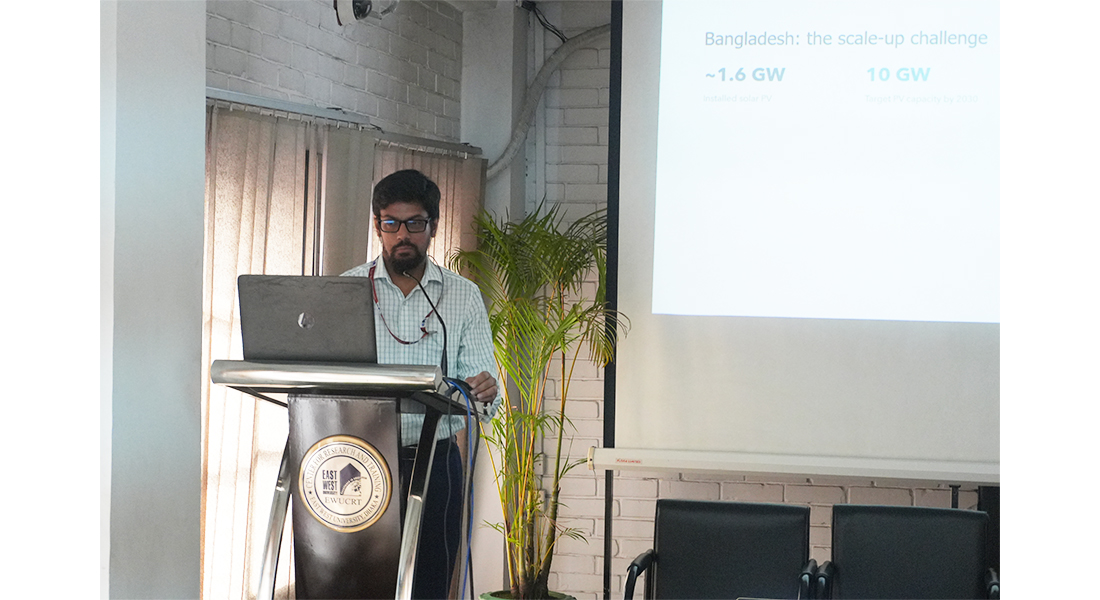
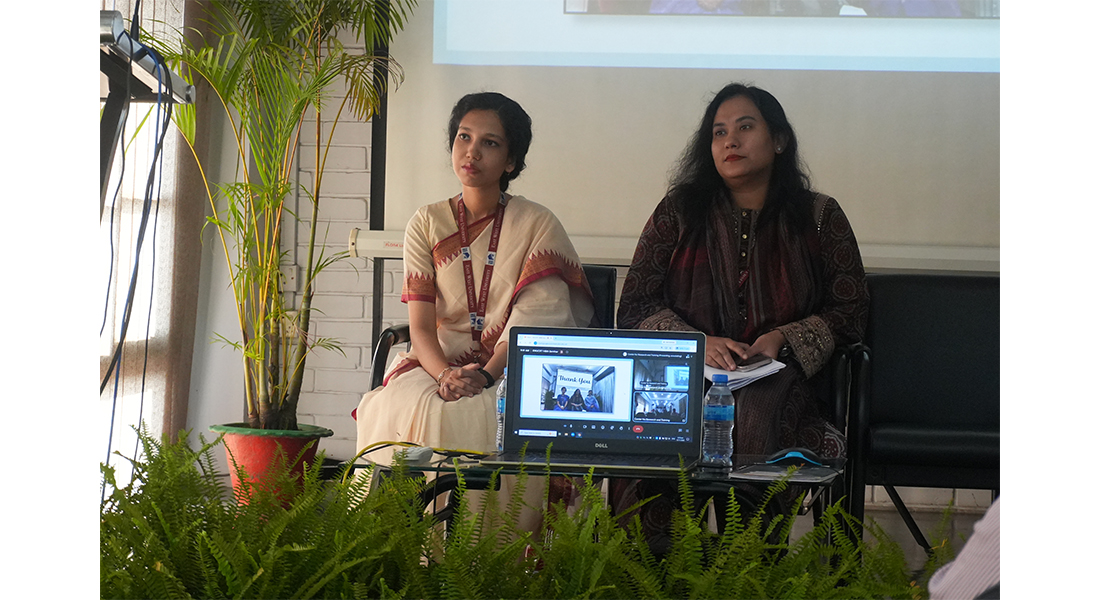
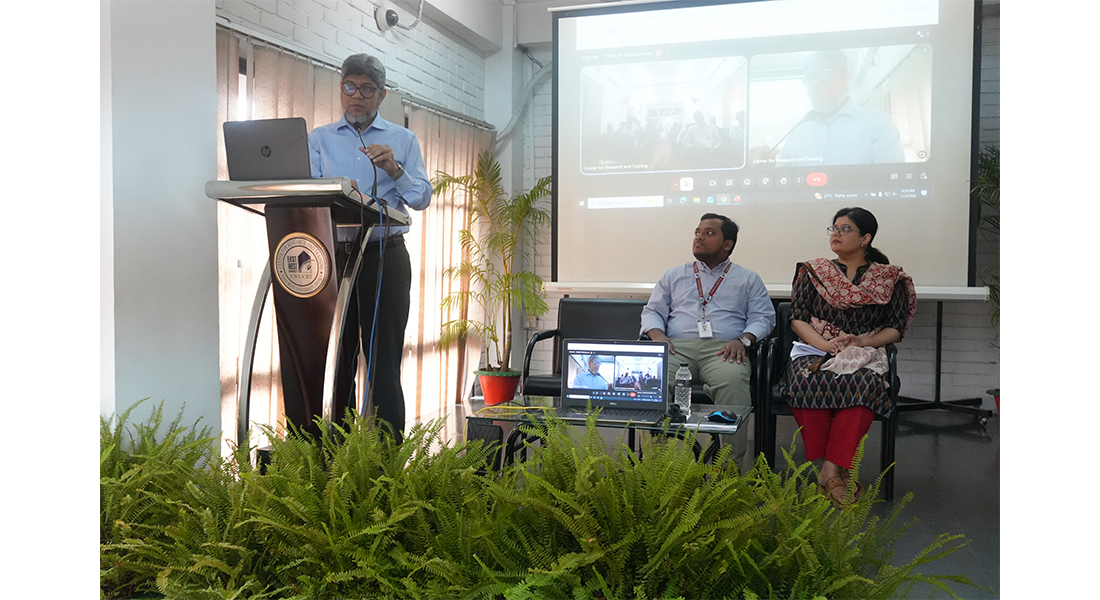
The East West University Center for Research and Training (EWUCRT) arranged its 30th Knowledge Sharing Seminar on 19 November 2026 at the S. M. Nousher Ali Lecture Gallery. The seminar was titled "Class, Status, and Power: A Sociological Analysis of Civil Service Career Aspirations in Bangladesh," presented by Professor Dr. Anisur Rahman Khan from the Department of Sociology at East West University (EWU). The session was chaired by Professor Dr. Mohammad Ashik Mosaddik, Chairperson (Acting) of EWUCRT and Vice Chancellor (Acting) of EWU. Professor Dr. Md. Sohel Rana, Executive Director of EWUCRT, delivered the introductory remarks to open the event.
During his presentation, Professor Dr. Anisur Rahman Khan examined why the Bangladesh Civil Service (BCS) continues to attract a large number of young job seekers. Utilizing sociologist Max Weber’s three-dimensional model of social stratification—class (economic factors), status (social prestige), and power (authority)—his qualitative study analyzed insights from newly appointed civil servants in the 78th Foundation Training Course alongside senior Joint Secretaries from the Senior Staff Course at the Bangladesh Public Administration Training Centre (BPATC).
The research revealed that while economic incentives play a role, social "status" and "power" serve as the primary motivators for joining the civil service. The findings also highlighted a growing trend of candidates with technical academic backgrounds opting for general cadres due to perceived inter-cadre disparities in authority, recognition, career progression, and workplace benefits. Comparing generational shifts, senior officials noted that today's candidates pursue BCS careers with significantly heightened competition and seriousness compared to past decades. To ensure optimal talent utilization, the study recommended targeted policy reforms addressing inter-cadre inequities, structured career counseling, and mental health support for job seekers.
The presentation was followed by an engaging Question and Answer session, where faculty members and attendees discussed the broader implications of bureaucratic structures on youth employment in Bangladesh. The seminar concluded with a formal Vote of Thanks.